
By Olanrewaju Osho
2 Timothy 3:7 is a sobering passage in the Bible. It speaks of people who are “ever learning, yet never able to come to the knowledge of the truth.” Is it possible for learning to be absolutely futile? The answer is in the affirmative. In Nigeria today, this bible passage reads like a mirror reflecting the political culture.
A NATION THAT LEARNS BUT DOES NOT CHANGE
Nigeria has practiced uninterrupted democracy for nearly three decades. In that time, citizens have watched elections come and go, leaders rise and fall, promises made and broken.
We have seen enough to know better. Have we known better? Our choices often suggest otherwise.
Despite the volume of political conversations—especially on social media—there remains a troubling gap between exposure and understanding, between information and wisdom.
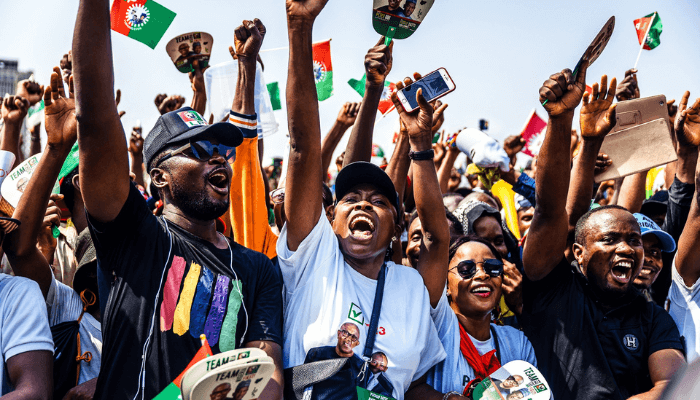
Nigerians are among the most active voices online. Politics dominates our timelines. Debates are constant. Opinions are loud. Emotions run high. But beneath the noise lies a disturbing reality:
- Conversations filled with division
- Arguments driven by bias
- Loyalty anchored in tribe, religion, or sentiment
- A shallow engagement with facts and history
What should be a space for enlightenment has largely become a theatre of confusion and polarization.
THE CRISIS OF POLITICAL LEARNING
The politics that dominates Nigeria today is not the politics that builds nations.
It is often:
- The politics of self-interest
- The politics of emotion over logic
- The politics of identity over competence
- The politics of deception over truth.
But the politics that lead to progress are different. It is built on:
- National interest
- Truth and integrity
- Logic and evidence
- Honesty and accountability
Sadly, after years of “learning,” millions still operate with political illiteracy—and that illiteracy produces predictable outcomes of wrong choices, wrong alignments, and wrong results.
THE REFLECTION BETWEEN LEADERS AND FOLLOWERS
Leaders do not emerge in isolation—they reflect the society that produces them. If Nigeria must truly move forward, the citizens must be ready to face this difficult truth. Many Nigerians loathe the difficult truth. A good number of those who can bear it don’t see the logic in it. No matter how much truth is detested by a people, truth is constant. It can’t bend its arc to satisfy the weakness of their hearts.
In many ways, the similarities between Nigeria’s leaders and followers are striking. Yet, not many people seem to have taken notice of them.
1. Foolishness
When citizens ignore history, overlook performance, and embrace recycled leadership without scrutiny because they are desperate for change, they mirror the very failures they complain about.
Leaders that continue to waste the opportunity to serve do so because they are foolish. A society that continually entrusts power to failed or failing politicians and those who have repeatedly underperformed cannot escape the consequences of that choice.
2. Wickedness
It is a moral failure for leaders to hold positions of power—whether as local government chairmen, governors, ministers, or national figures—and leave behind little or no meaningful impact. But it is equally troubling when citizens knowingly support such individuals again and again, presenting them as saviors. Both behaviour is a clear demonstration of wickedness.
3. Hypocrisy
Public memory in Nigeria is often short. Yesterday’s villains are today’s saints. Those once criticized for poor leadership are quickly rebranded and celebrated under new alliances as heroes. Yesterday’s outrage becomes today’s endorsement.
When principles are sacrificed for convenience, hypocrisy becomes normalized and the cycle of poor governance and political near – success syndrome are allowed to continue.
THE ILLUSION OF POLITICAL REBRANDING
Changing party names or forming new coalitions does not automatically produce a new leadership culture.
A large political structure without substance changes nothing. It may tickle people’s fancy. But as long as Nigerians continue to be satisfied with the same individuals, with the same political history, the same track records, the same methods, and the same mindset regrouping under a different banner, then little truly changes. A new label does not guarantee a new direction. From the ongoing political happenings, it’s clear the lessons of 2015 and 2023 are proving insufficient for Nigerians in the build – up to 2027.
THE CONSEQUENCE OF NOT LEARNING
History is clear. It always speaks to those who are not unwilling to learn. When people fail to learn from the past, they remain trapped by it. As the countdown to 2027 gathers momentum, the way opinions are beginning to coalesce suggests that Nigeria again risks becoming a nation caught in a cycle—repeating the same political choices and expecting different outcomes.
THE QUESTIONS THAT MUST BE ANSWERED
As 2027 approaches, these questions demand honest reflection:
- Does Nigeria truly lack enough good voters to reset the country on a clean foundation?
- Why do Nigeria citizens continue to depend on established political structures instead of becoming the structure for change themselves?
- Can old methods, old habits, and old actors produce a genuinely new outcome?
- Do Nigerians genuinely seek a new beginning—or merely a change in who holds power?
THE WAY FORWARD: FROM LEARNING TO TRANSFORMATION
The problem with Nigerians is not a lack of information. The problem is a lack of transformation.
For Nigeria to move forward some things must have to happen amongst the people.
Firstly, learning must lead to understanding. Citizens must go beyond headlines and sentiments to grasp the deeper implications of their choices.
Secondly, understanding must lead to responsibility. Every voter must recognize their role in shaping leadership outcomes. They must open their hearts and brains together in processing political choices to make.
Finally, responsibility must lead to action. Every good and patriotic Nigerian must engage actively in politics, evaluate candidates critically and reject mediocrity consistently.
Anything short of these will make Nigeria continue to experience political perambulations.
The warning in 2 Timothy is not just spiritual—it is profoundly civic. People who are always learning, yet never applying truth, will remain stuck in cycles of failure.
Nigeria does not just need informed citizens. It needs transformed voters. Nigeria needs voters who see beyond the excitement of the moments. Nigeria needs voters who are not ashamed to lay a new foundation that is required to birth a truly great nation. Because in the end, a nation rises when its people not only learn—but grow.
Olanrewaju Osho is a communication specialist, management consultant, passionate advocate for development, pastor and SDP Candidate for the FCT Senatorial seat in 2023 elections.