

The Nigerian Communications Commission (NCC), Nigeria’s telecom regulator, has warned that the country must rapidly scale Fibre-to-the-Home (FTTH) infrastructure to reach its $1 trillion economic goal.
Speaking at an industry forum in Lagos, NCC Executive Vice Chairman Dr. Aminu Maida said fixed fibre broadband is severely underprovided: Nigeria has only about 265,000 active FTTH subscriptions, well below Africa’s average penetration and far short of levels in mature markets. He framed the low base as a major opportunity, arguing that fibre is essential for speed, resilience, and scalability required by AI, cloud services, streaming and other data-heavy uses, and that broader fibre access will boost competitiveness, productivity and investment.
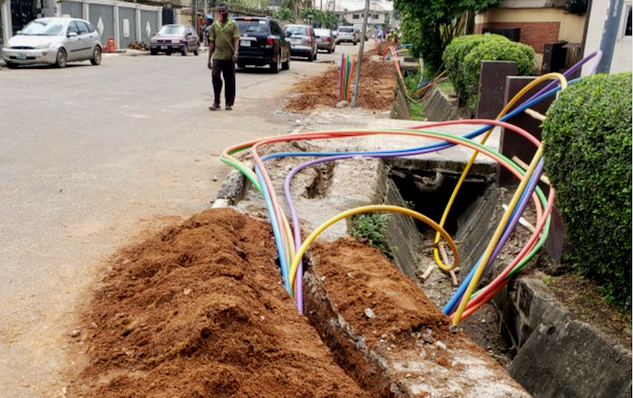
To catalyze deployment, the NCC is launching a Wholesale Fixed Broadband Market Assessment to study competition, encourage infrastructure sharing, and promote open-access models to lower consumer costs. Maida also urged state governments to remove Right of Way (RoW) barriers including high fees, slow approvals, and overlapping permits, that inflate rollout costs and delay projects. Thirteen states have already waived RoW fees and 16 follow the recommended N145 per linear meter; the NCC will continue to press other states to comply.
The Commission introduced an Ease of Doing Business Portal with state-level RoW fees, approval processes, infrastructure maps and regulatory guidance to improve transparency. It also called on property developers and urban planners to include telecom ducts and fibre during construction rather than retrofitting, which reduces costs and speeds service activation.
NCC further stresses that deployment must meet strict technical and safety standards to avoid poor installations, network failures, and higher maintenance costs, emphasizing durable, high-quality builds that will support Nigeria’s digital needs for decades.