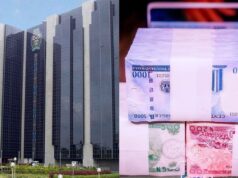

The Governor of the Central Bank of Nigeria, Olayemi Cardoso, has revealed that 32 Nigerian banks have already met the new minimum capital thresholds under the ongoing recapitalization program, signaling strong industry compliance and a more resilient financial system.
Speaking at a monetary policy forum in Abuja, he described the progress as a major step toward strengthening banks’ capacity to support long-term investment and Nigeria’s ambition of becoming a $1 trillion economy. The recapitalization is part of broader reforms aimed at improving governance, tightening risk management, and enhancing regulatory oversight. These include a risk-based capital framework, stricter rules on insider lending, reduced regulatory forbearance, and limits on credit for high-risk borrowers. Supervisory systems have also been upgraded with digital monitoring tools and stronger cross-border oversight. Below is the list of all the banks that have met the recapitalization deadline:-
International Banks (₦500B Threshold)
These banks with international licenses have confirmed compliance through rights issues, private placements, and capital injections.
| Bank | Capital Raised/Noted |
| Access Bank | ₦602.8B |
| Zenith Bank | ₦614B |
| First Bank/First HoldCo | Met threshold |
| GTBank (GTCO) | Above ₦500B |
| UBA | Above ₦500B |
| Fidelity Bank | ₦564.5B |
| FCMB Group | Met requirement |
National Banks (₦200B Threshold)
National license holders meeting the lower threshold via similar fundraising methods
| Bank | Notes |
| Ecobank Nigeria | Crossed ₦200B |
| Stanbic IBTC | Via rights issue |
| Sterling Bank | Met requirement |
| Wema Bank | ₦150B raised |
| Citibank Nigeria | Confirmed |
| Standard Chartered | Parent support |
| Globus Bank | Above ₦200B |
| Premium Trust Bank | Exceeded via raises |
| Providus Bank (w/ Unity) | Merger compliance |
Other Categories
- Merchant Banks (₦50B): FSDH Merchant Bank, Greenwich Merchant Bank, Nova Bank, Rand Merchant Bank.
- Non-Interest Banks (₦20B): Jaiz Bank, Lotus Bank, TAJBank.
- Additional mentions in reports include Optimus Bank, Parallax Bank, Signature Bank, SunTrust Bank for regional or other categories.
Cardoso highlighted that aggressive monetary tightening helped curb inflation significantly, bringing it down from 34.8% in late 2024 to 15.06% by February 2026. This followed substantial interest rate hikes before a gradual easing phase. He noted that without these measures, inflation could have worsened.
On foreign exchange reforms, the apex bank cleared over $7 billion in backlog obligations and introduced a more transparent market system. These efforts improved market stability, reduced the gap between official and parallel exchange rates, and boosted investor confidence. Diaspora remittances also increased sharply—from about $200 million to $600 million monthly—with a target of $1 billion by the end of 2026.
Nigeria’s external reserves strengthened notably, with gross reserves rising to $50.12 billion and net reserves surging significantly. This improvement was attributed to better reserve management, diversification strategies such as gold integration, and stronger external asset oversight.
Additionally, the bank has modernized the payments system, strengthened fraud controls, and expanded financial inclusion initiatives.
Looking ahead, Cardoso said the focus will be on sustaining reforms by achieving single-digit inflation, maintaining exchange rate stability, and building stronger reserves. He projected economic growth of 4.49% in 2026, while cautioning about global risks such as geopolitical tensions and oil price volatility. Nonetheless, he expressed confidence that Nigeria’s most difficult adjustment phase is over, with improved economic fundamentals supporting a more stable outlook.