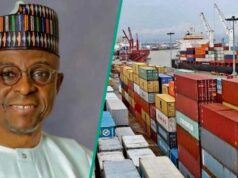


The Chief Executive of the Nigerian Upstream Petroleum Regulatory Commission (NUPRC), Oritsemeyiwa Eyesan, has unveiled a 60-day plan to fully digitize the commission’s internal communications and operations. The initiative aims to eliminate paper-based processes, boost transparency, improve efficiency, and strengthen regulatory oversight within Nigeria’s upstream petroleum sector.
Eyesan announced the program during a visit by Musa Sarkin Adar, Executive Secretary of the Nigeria Extractive Industries Transparency Initiative (NEITI), to the commission’s headquarters in Abuja on February 23, 2026. According to a statement issued by NUPRC’s Head of Media and Strategic Communication, Eniola Akinkuotu, the transition to full digitization will ensure that all transmissions become electronic, enhancing speed, traceability, and accountability.
Eyesan noted that earlier automation efforts, particularly in royalty collection and monitoring, have already improved compliance. She explained that default rates were previously high but dropped significantly after the commission implemented its digital system in 2025. She added that complete digitization would further improve regulatory performance and transparency, especially as Nigeria prepares for new licensing rounds and investment opportunities.
In his remarks, Adar called for closer collaboration between NUPRC and NEITI, emphasizing the importance of data sharing and institutional coordination to strengthen transparency, enforce compliance with the Petroleum Industry Act, and boost investor confidence. He also encouraged the commission to participate in the 2026 global conference of the Extractive Industries Transparency Initiative to stay aligned with evolving international standards.
The move aligns with broader reforms in Nigeria’s oil and gas sector following the 2021 enactment of the Petroleum Industry Act, which restructured regulatory institutions and prioritized accountability, transparency, and improved revenue generation. Enhanced cooperation between NUPRC and NEITI is seen as vital to increasing production, reducing revenue leakages, and strengthening governance in Africa’s largest oil producer.